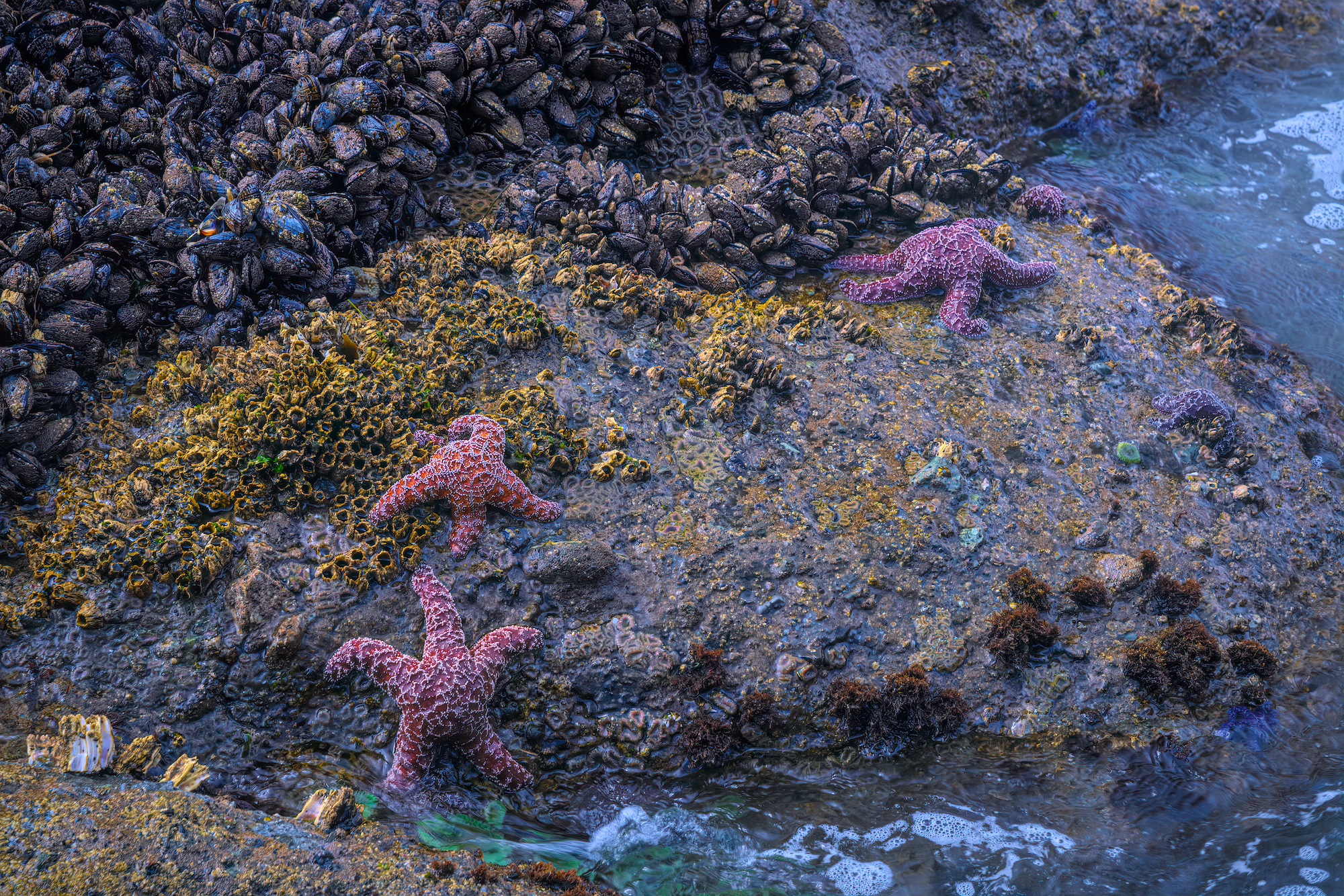
It may seem pretty obvious that changing shorelines disproportionately affect communities that exist right at the shoreline, but the ways and extent to which they are affected can be shocking. Intertidal communities are especially vulnerable to shoreline deposition and erosion, both of which make their former homes uninhabitable. Shoreline deposition, which we learned about along with circulation cells and how we have changed and exacerbated the issues caused by shoreline deposition and erosion. Somewhat counterintuitively — stepping back can sometimes be how we can best undo what we’ve nearly destroyed, with little or no intervention.

Seawalls and other shoreline protections that we build to preserve our architecture and reduce the variance in the shoreline succeed in both of those goals, but often have heavy unintended consequences on the local intertidal ecosystems. Shoreline erosion leads to a change in the habitable areas, moving back out towards the open ocean, and can directly lead to the death for any intertidal organisms that have evolved to sessile in order to more withstand the push and pulls of the waves and the beating heat of the sun during low tide. Shoreline deposition on the other hand, can completely bury the existing communities under layers of sediment, and can reduce the amount of rocky surface area that new larvae can hold onto to rebuild the community that was lost. Notably, both of these phenomena reduce the variance we see in the intertidal zones, reducing biodiversity and interrupting the ecosystem’s natural cycle and leading to prolonged or permanent disadvantageous conditions for many intertidal species.

It’s not entirely reasonable, however, to completely remove all shoreline modifications and destroy all of our docks. It would be a good start to reduce the amount that we build and attempt to slowly deconstruct the extraneous shoreline protections, and to continue and perhaps ramp up the shoreline protection programs we have to counteract the effects of our existing shoreline modifications. Intertidal organisms have evolved to withstand wildly different conditions on a daily cycle, but these adaptations cannot completely make up for environmental modification and destruction. When these ecosystems cannot follow their natural cycle it often leads to a very strong shift away from certain species and towards others, depending on the nature of the shift, and can even lead to species locally vanishing, retreating to where they can more easily thrive. We need to step back and let these ecosystems recover, returning to their natural cycles and letting them adapt to their already very different conditions.
Leave a Reply