Last week, I discussed a story of a Washington State Oyster farm. I told the story of the Taylor family who have been making a living in this business for decades. Now, they are dealing with concerns for the future of their farm due to ocean acidification.
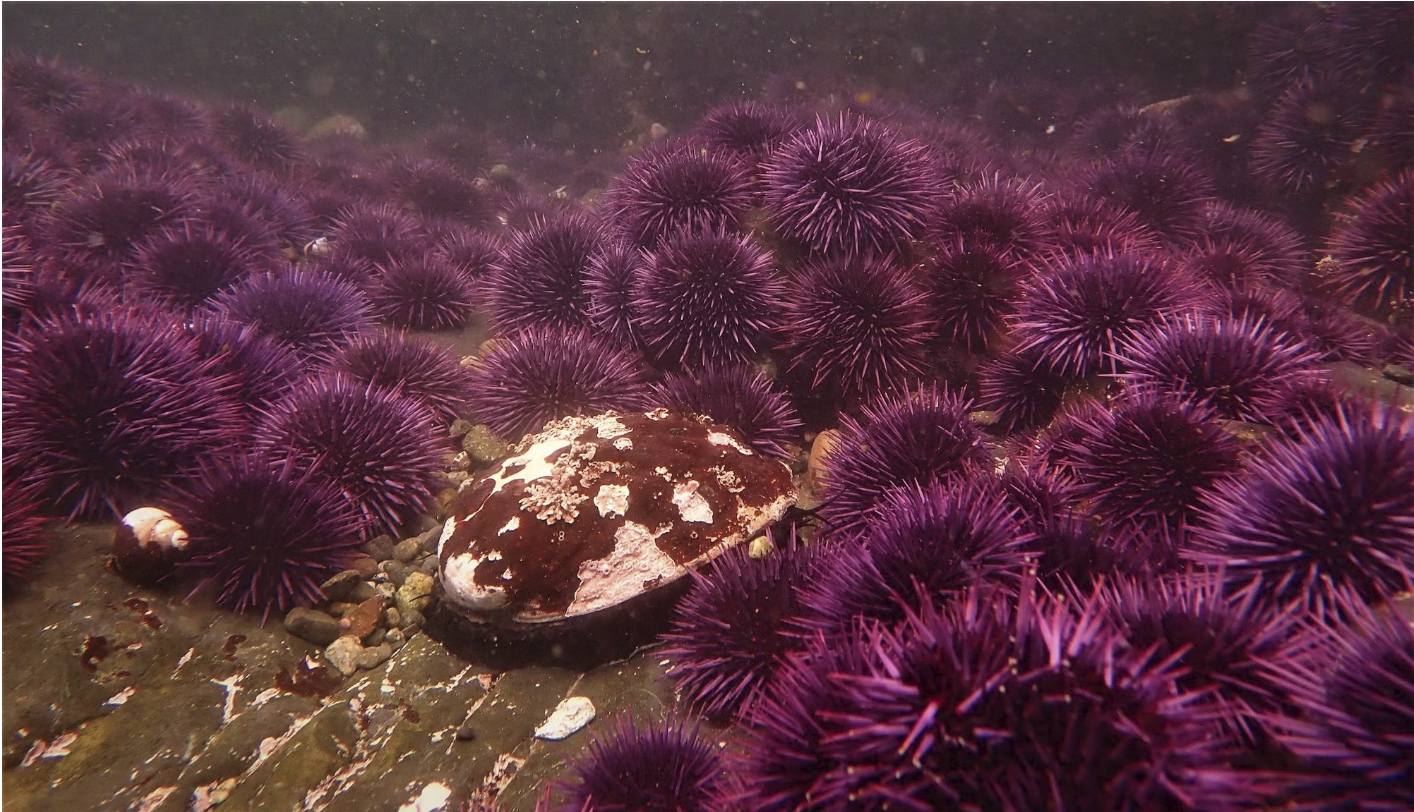
This week I decided to further investigate this and look into how scientists are studying ocean acidification on calcifying organisms. I came across a 2023 study at UC Davis on the Red Abalone, which is the world’s largest species of abalone, a marine gastropod mollusk (sea snail) that is known for its thick, brick-red shell and pearl like interior. The “red abalone is a California icon,” said co-author Daniel Swezey, a research scientist with the UC Davis Coastal and Marine Sciences Institute and its Bodega Marine Laboratory.
The article notes “Red abalone can live 50 years or more and are an important kelp forest species. For thousands of years, they have played a central role in the diet and cultural history of the region’s coastal Native people.”
The red abalone is found off the coast of California, however, due to ocean acidification, habitat degradation and other climate change impacts have decreased their population abundances. As of 2023 red abalone has been determined to be critically endangered on the International Union for Conservation of Nature’s Red List.
Methods
The study at UC Davis was focused on determining how larval exposure to acidic water can impact abalone development, reproduction and survival of future generations. They conducted their study by first spawning adult red abalone and exposing half of the larvae to current ocean conditions and the other half to near-future, highly acidic conditions for the first three months of life. The surviving abalone were then raised for four years before being exposed again to either high or low acidity conditions as adults.
The researchers measured their growth and reproductive potential using ultrasound, and then spawned them again to study how parental exposure affected the next generation.

Findings
They determined that early-life exposure to ocean acidification reduced growth rates even years later, especially when the abalones were exposed to acidic water again as adults. Ocean acidification also reduced reproductive ability, and the negative effects carried over to the next generation, decreasing the survival and growth of their offspring. Although adult abalones showed some resilience, the larval stage was especially vulnerable, with longer exposure to acidic conditions causing significant stress and mortality.
Conclusion
Reading and understanding studies like this are important because it helps us see that ocean acidification is not just a short term problem, but one that can have long lasting and even generational effects. This research also gives aquaculture operations and conservation programs clearer guidance on when buffering water chemistry might protect vulnerable life stages.
If I could give some advice to the Taylor shellfish farm or any shellfish farm dealing with the impacts of climate change, I would recommend that in order to increase survival rates in their product, they should make sure to continue to keep their larve in hatcheries with ideal water parameters.
Ultimately, studies like this connect science to real world impacts, whether that is family run oyster farms or the future survival of a California icon like the red abalone. It is important to understand how we can protect and strengthen organisms suffering from the consequences of our actions.
If you are interested in reading more about this study, red abalones, and dive deeper into how processes like ocean acidification and upwelling work on these ecosystems I encourage you to dive in to this article: https://www.ucdavis.edu/climate/news/ocean-acidification-creates-legacy-stress-red-abalone
That’s all for now!
Best,
JCP
Leave a Reply